
How to unclog a toilet—and when to stop
If water rises, stop flushing. This guide explains when a plunger may help and when to call for service. If you need the toilet cleared, call to confirm the price and arrival window.
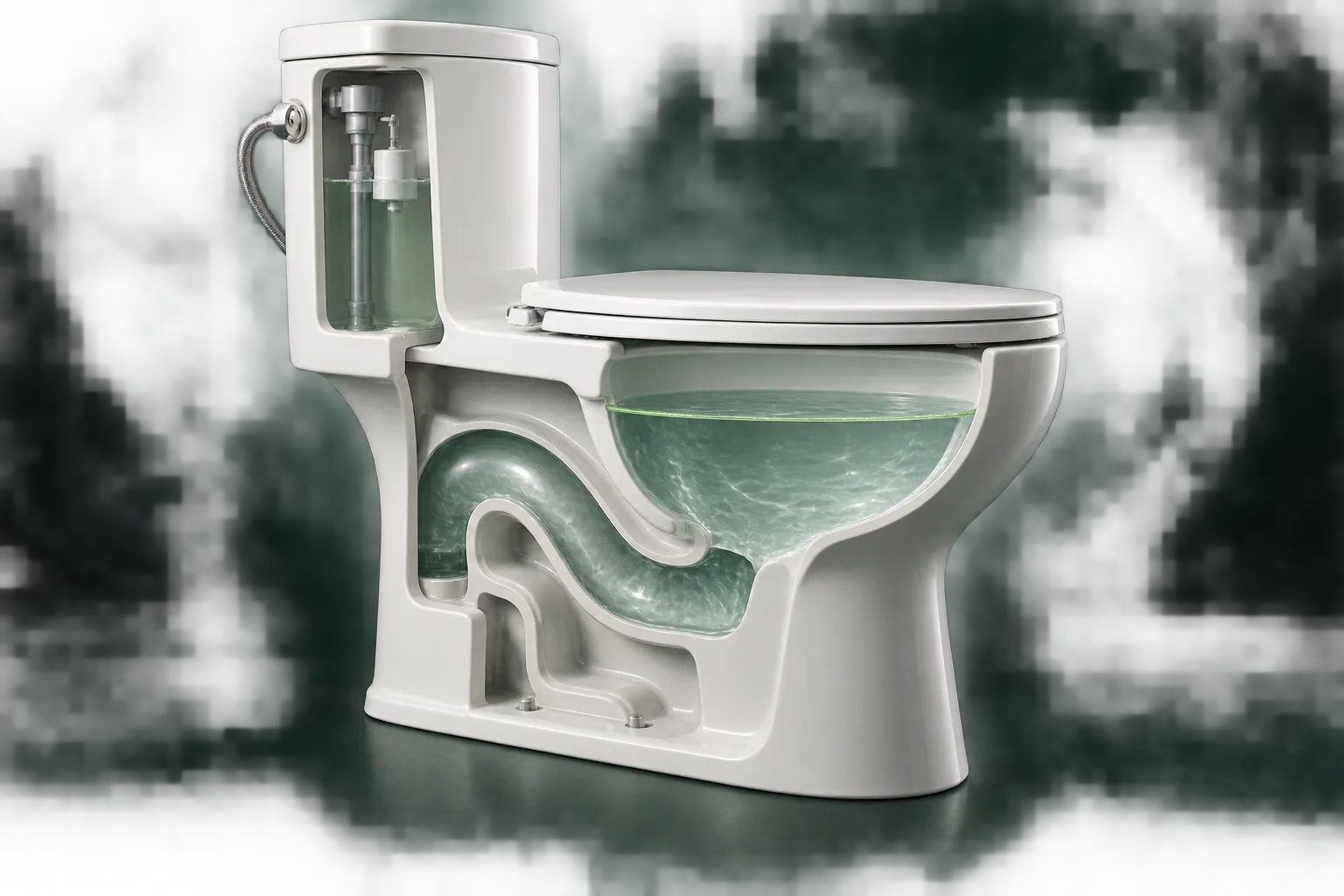
- High or rising: do not flush.
- A falling level does not prove clearance.
Toilet clogged and water rising?
An isolated clog and water rising at another fixture need different next steps. Use what you already noticed; do not flush to demonstrate it.
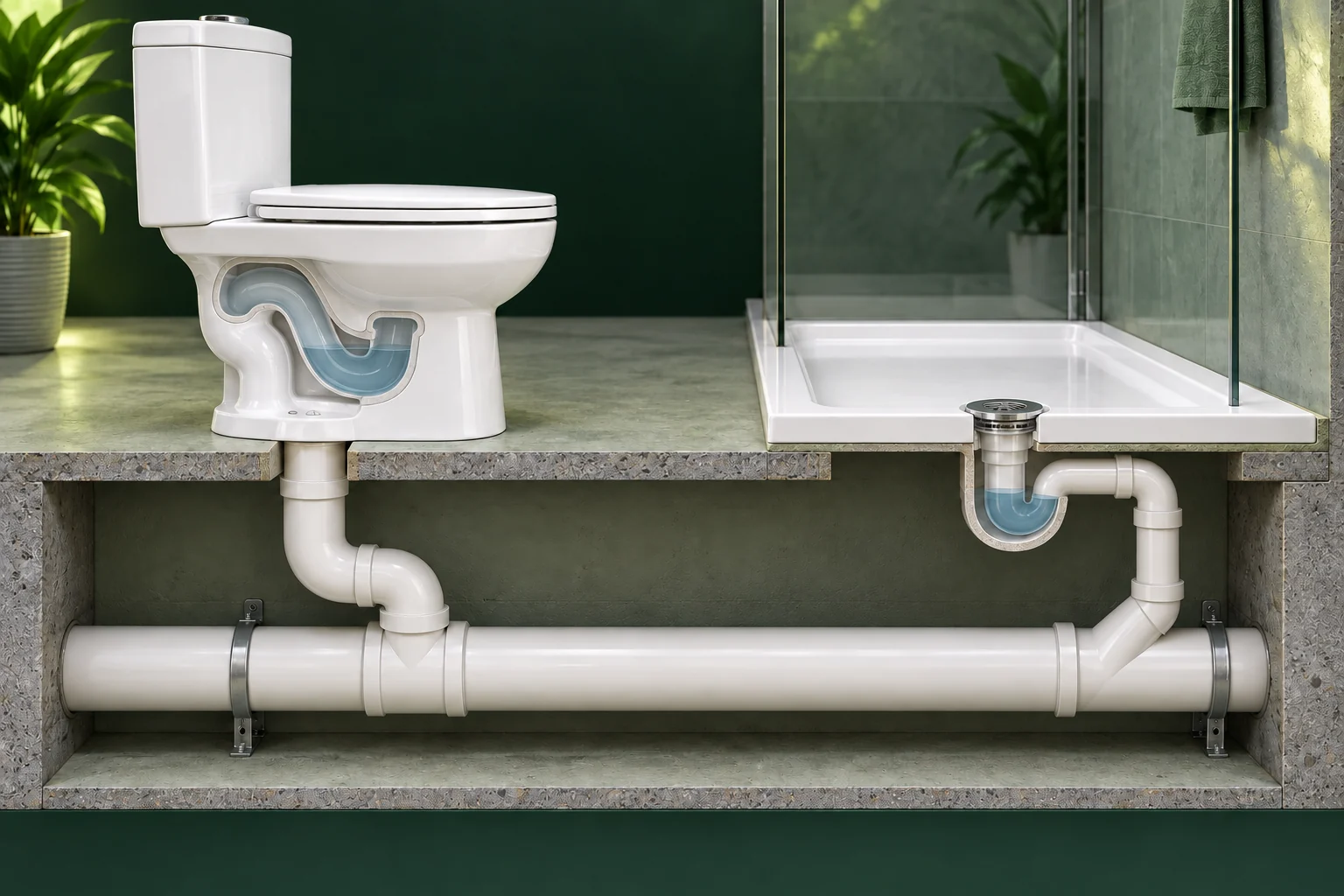
- Only the bowl
- Another fixture
- Assess the line
What happens. Where it happens. What you tried.
Can I unclog the toilet myself or should I call a professional?
Rising water, drain chemicals or several fixtures backing up change what is safe to try. Answer these four questions before attempting to clear the clog.
Answer all four questions to see a next step.
Stop adding water
Do not flush again. Stop using the affected fixture and avoid adding more water. Ask for help and say that the water is rising or spilling.
Pause cleaning attempts
Drain cleaner may be present. Do not plunge or add or mix products. Tell the person responding what was used, or that you do not know.
Notify building management
Report which units or shared areas are affected. Confirm who can authorize access and work before anyone intervenes on a shared line.
Arrange an assessment of the affected fixtures
Describe which fixtures in the home are affected. These symptoms alone do not locate the blockage or prove a main-line problem.
Get an assessment before trying more
Some information is still uncertain. Pause attempts to clear the blockage until the conditions and an appropriate next step are clarified.
Avoid forcing the object
Do not force the object farther in or repeat attempts that could move it. Explain what may have fallen in so its removal can be assessed.
Review this guide’s basic steps
Your answers do not flag the risks above. Review the basic steps and their limits. If conditions change or you become unsure, stop and request an assessment.
Observations to share
- Water is rising or spilling: stop using the affected fixture; do not flush repeatedly.
- Drain cleaner was used or may be present: no plunging or adding or mixing products.
- Several fixtures in the home are affected: identify them when arranging an assessment.
- Other units or shared areas are affected: notify management and confirm authorization.
- A solid object may be present: do not force it farther in.
- At least one answer is uncertain: pause DIY attempts until it is clarified.
Pause DIY attempts. Share all of these observations when asking for help.
How to use a toilet plunger
For one toilet with no drain cleaner, suspected object, sewage in the room or backup in other fixtures or units. If any condition is unknown, stop and arrange an assessment. The check above is optional.
Toilet plunger
A projecting flange is designed to seal the curved bowl outlet.
Flat-cup plunger
Designed for flat drain surfaces; it may not seal a toilet bowl well.
- First, check the water level.Do not flush again. If the supply valve is safely reachable and turns freely, close it without forcing it.
High or rising: add no water. If high but stable, wait about 10 minutes; a falling level does not prove clearance. If it remains high or there is not enough room to insert the plunger without overflowing the bowl, do not insert it: leave the toilet unused and arrange help. Do not scoop out dirty water. Korky’s waiting guidance.
Only when low and stable, you may slowly add room-temperature water just to cover the plunger base. Stop once the base is covered; if there is not enough room to do that without approaching the rim, do not add water.
- Fill the cup and center the seal. Wear gloves. Lower the plunger at an angle to fill its cup with water; then bring it upright, centered over the outlet, without splashing.
- Start gently and pause. Use a gentle first push, followed by slow, controlled push-pull movements while keeping the seal. Pause to observe. Repeat only if the level is lowering or drainage improves and conditions remain safe. Stop for rising water, splashes, water at another fixture or no improvement.
- Test a flush only after normal drainage returns. A slow drop is not enough. Only when water drains at its normal rate, restore the supply and try one watched flush. If it rises again or drains slowly, stop and arrange help.
Korky: seal, movement and testing · Drano: gentle initial push. The water and stopping limits are our conservative adaptation; follow your toilet and tool instructions.
How do you unclog a toilet without a plunger?
This option is limited to one toilet with expected toilet paper or human waste: no drain cleaner or other products already added, objects, backup in other fixtures or units, or sewage outside the bowl. If you cannot confirm every condition, do not try it.
- Wait about 10 minutes first. Do not flush or add anything while the level is high or rising. If it does not become safely low and stable, arrange help.
- Optional soap, only with sufficient room. With a low, stable level, you may add about half a cup of liquid hand-dishwashing soap to the bowl, never the tank. Let it stand; no waiting time guarantees a result. Stop if the level rises.
- Observe with a little water, without flushing. Only if the level falls and stays low, with sufficient room, slowly add a little room-temperature water. Stop if it rises or drains slowly. This does not guarantee that the blockage is gone.
Drano: half-cup soap suggestion · Korky: waiting for a safe level. Follow the instructions for your toilet model and stop if the water rises.
If it does not improve, leave the toilet unused and get a suitable plunger, a toilet auger used according to its manual, or a professional assessment.
Dish soap is not drain cleaner. Drano Liquid is not for toilets and prohibits plunging during or after use. If drain cleaner was already added, do not add soap or other products, and do not plunge. Product precautions.
Does hot water help? What about baking soda and vinegar?
American Standard describes soap with hot, non-boiling water and about 10 minutes before returning to the plunger, not a standalone no-tool solution. Your toilet manual controls permitted temperatures; this guide uses room-temperature water. American Standard’s context.
Baking-soda-and-vinegar fizz is not proof that a blockage has moved. Poison Control explains why that reaction generally produces little useful pressure in an open drain. Poison Control explanation
For exposure to drain cleaner or its fumes, contact Poison Control at 1-800-222-1222. This is poison-exposure assistance, not our plumbing number.
Toilet water rises then slowly drains: is it still clogged?
A falling bowl level does not identify the cause or prove the whole drainage path is clear. Watch the next normal use. If it blocks again, record what happens and when; do not keep flushing to test it. Why a toilet keeps clogging.
Camera inspection is a separate option assessed against access and recurrence. It is not automatically needed after every toilet clog. What a camera can show.
When should I call for professional drain cleaning?
Call if a safe, limited attempt does not improve drainage, the clog returns or several fixtures back up. If water is rising or drain cleaner may remain, stop further attempts and get help.
- Which fixture is affected, and whether using another changes the water level.
- When it began, whether it recurs and what you tried.
- Any product used or object that may have fallen in.
- Whether an owner or building manager must authorize access.
We take service requests across South Florida. Share your ZIP to confirm coverage and availability. If you are outside our area, use a professional who serves your address. Service area.
Call for drain cleaningSources and limits
- American Standard — toilet clearing
- Korky — toilet plungers
- Korky — overflow and waiting
- Drano — dish-soap suggestion
- Drano — product precautions
- National Capital Poison Center — drain cleaners
- City of Fort Lauderdale — sewage overflow guidance
Prepared by Drain Cleaning Boys using these sources and checked on the date above. The tool organizes observations; it cannot locate a blockage, diagnose a pipe or decide who pays. Your product instructions and actual conditions take priority. We are not affiliated with these manufacturers or agencies.